Communication infrastructure is the connected system of language, assets, channels, tools, governance and workflows that allows an organisation to communicate clearly, consistently and at scale.
It ensures people can find the right information, use the right assets and communicate with confidence across every team, location and customer touchpoint.
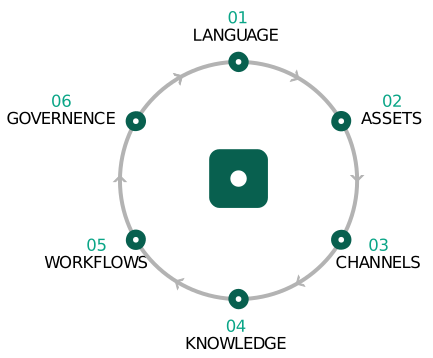

As organisations grow, communication becomes more complex.More people create information. More teams use it. More channels distribute it. Without shared standards, trusted systems and clear ownership, communication begins to fragment. Communication infrastructure connects those moving parts so clarity can be repeated across the organisation.
1
Define what must be consistent
Establish the language, standards, messages and principles that should remain clear across every location, team and channel.
2
Connect information and tools
Organise the websites, documents, templates, platforms and knowledge sources people rely on to communicate and work.
3
Create ownership and governance
Define who creates, approves, updates and controls communication so the system remains accurate as the organisation evolves.
01
Clear language that helps teams explain the organisation, its services and its value consistently.
02
Trusted digital channels that accurately reflect the organisation and make information easier to access.
03
Controlled, practical assets that reduce duplication and help staff produce consistent communication.
04
Reliable sources of information that reduce dependence on inboxes, local folders and individual memory.
05
Processes that reduce repetitive work, improve accuracy and make communication easier to maintain.
06
Clear responsibility for approving, updating and protecting communication across the organisation.

Strong communication infrastructure reduces friction across operations, staff experience, customer communication and growth.It gives people clearer information, more reliable tools and greater confidence in what they communicate.
Staff clarity
People spend less time searching, checking versions and asking repeated questions because trusted information is easier to find.
Consistent customer experiences
Customers receive clearer and more consistent information across locations, teams and communication channels.
Faster execution
New services, locations, campaigns and operational changes can be communicated with less duplication and rework.
Greater control
Leadership gains clearer oversight of how information is created, maintained and used across the organisation.
A website, document, template or automation can solve an immediate need. But without shared language, trusted information, clear ownership and practical governance, the organisation will gradually return to the same inconsistency and duplication.
Sterling Volk starts with the wider communication system, then uses strategy, design, digital platforms, AI and automation as tools to strengthen it. The result is not simply a collection of better assets. It is a clearer, more consistent and more scalable organisation.
A Communication Debt Assessment identifies where your existing communication infrastructure is fragmented, outdated or difficult to manage.
You receive a clear diagnosis, prioritised recommendations and an implementation roadmap showing what to strengthen first.